Reconstructing damaged image regions with a DRLN
Restoration quality should be judged at the missing boundary, where texture, structure, and continuity have to be inferred.
Inspect the aligned outputs.
A deep recursive laplacian network reconstructing deliberately damaged regions in grayscale imagery.
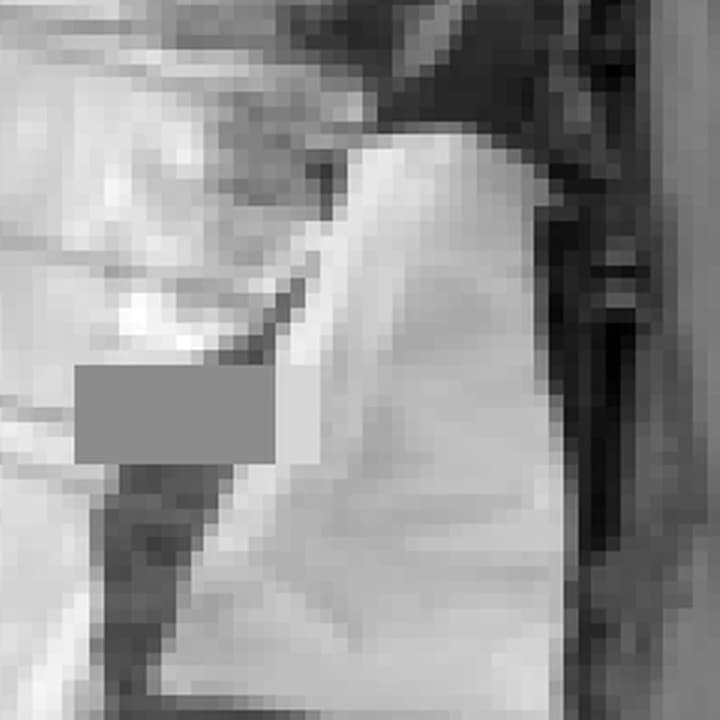
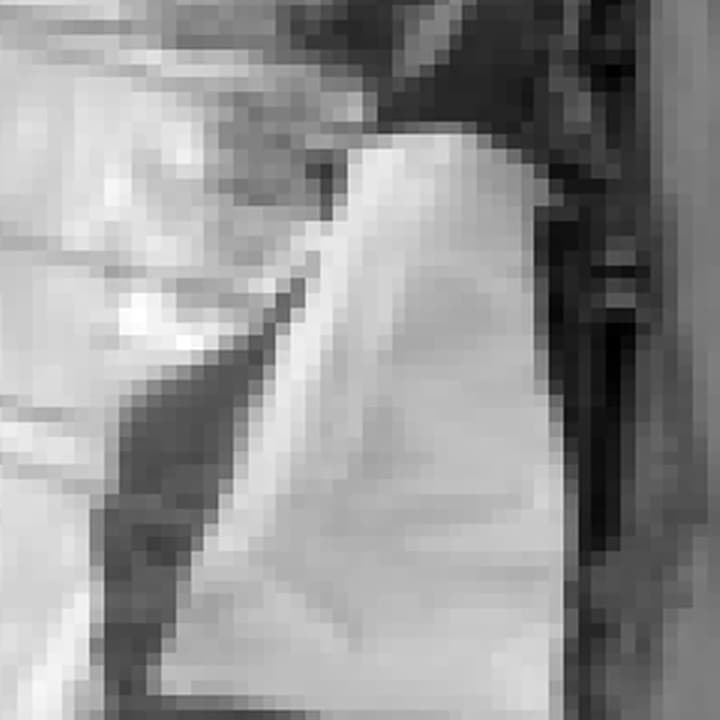
Judge the missing region directly.
Drag the boundary on the image, use the keyboard-accessible slider, or move a mouse over the crop for a 4× inspection lens.
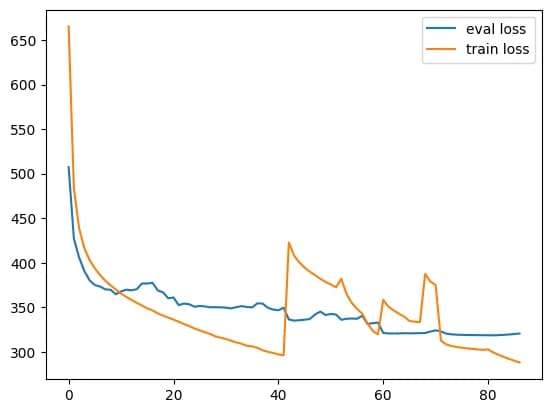
Loss reveals where training changed regime.
The notebook’s train and evaluation traces are shown as recorded, including the later discontinuities rather than smoothing them away.
Recover a coherent image region from a block-corrupted input without disguising the model’s errors behind a single aggregate metric.
- 01
Adapted a Deep Recursive Laplacian Network (DRLN) workflow for the restoration task.
- 02
Serialized trained model variants and evaluated prediction behavior on held-out examples.
- 03
Compared corrupted input, reconstruction, and reference at exactly the same crop.
The original per-pixel arrays are not retained in a form that supports a trustworthy residual-error map, so the page keeps the evidence to aligned visual comparisons and the recorded loss curve.
- PyTorch
- Python
- DRLN
- Jupyter
- Image restoration